
Sleep Apnea Screening & Airway Root-Cause Care — Orland Park, IL
We don’t diagnose sleep apnea, prescribe CPAP, or fit oral appliances — but we screen for the anatomy driving it and help you get the right evaluation.
If you snore, wake up unrefreshed, grind your teeth at night, or have been told you may have sleep apnea, the why usually lives in the airway — tongue posture, palate shape, nasal breathing, restricted lingual frenum, jaw development. That’s the lane where an airway-trained dentist can help. At Inspire Dental Wellness in Orland Park, Illinois, we screen for the upstream contributors to sleep-disordered breathing, give you a clear written summary to take to your sleep physician, and coordinate care across a team of specialists when the findings warrant it.

What a Dentist’s Role Is — And Isn’t — in Sleep Apnea
Sleep apnea is a medical diagnosis made by a sleep physician, usually after a sleep study. The treatments — CPAP therapy, an oral appliance fitted by a dental sleep specialist, or surgical intervention — each belong to a specific provider. A dentist trained in airway evaluation sits upstream of all of it: we look at what in the mouth, tongue, palate, and jaw may be contributing to the problem, and we coordinate with the physicians who diagnose and treat it.
Being clear about this up front isn’t us being modest. It’s the difference between a patient getting appropriate care and a patient getting an appliance for a problem that needed a sleep study first.
What we do
- Screen for signs of airway and sleep-disordered breathing at every adult exam
- Evaluate tongue posture, palate shape, lingual frenum restriction, jaw development, and Mallampati score as anatomical contributors
- Use Cone Beam CT (CBCT) to visualize airway volume when findings warrant imaging
- Administer the Epworth Sleepiness Scale as a primary screening tool, with STOP-BANG when broader risk-factor scoring fits the case, to flag patients who should pursue a sleep study
- Provide a written findings summary you can take to your sleep physician
- Coordinate with your sleep physician, ENT, allergist, and myofunctional therapist across the care plan
- Address the dental-scope upstream contributors we do treat — frenectomy, airway-focused orthodontic evaluation, restorative work that opens airway volume
What we don’t do
- We don’t diagnose sleep apnea. Diagnosis requires a sleep study interpreted by a sleep medicine physician.
- We don’t fit oral appliances (MADs). When your physician prescribes one, we refer you to a dental sleep medicine specialist who fits them.
- We don’t prescribe or manage CPAP therapy. That’s your physician’s scope.
- We don’t replace a sleep study. Our screening flags who needs one; it doesn’t substitute for one.
Why this matters
The root cause of many adult obstructive sleep apnea cases is anatomical — how the tongue, palate, and airway developed. That’s the lane where a trained airway dentist can help. Fitting an appliance without understanding the upstream anatomy is treating the symptom, not the cause.
Signs You Might Want an Airway Evaluation
You don’t need a diagnosis to come in. An airway screening is useful when any of the following patterns are part of your life — or when a partner, pediatrician, or physician has flagged concern.
Symptoms you (or a partner) notice
- Snoring (yours or a partner’s observation)
- Unrefreshing sleep despite full hours
- Morning headaches or jaw tension on waking
- Nighttime teeth grinding (bruxism)
- Daytime fatigue that coffee doesn’t touch
- Partner-reported pauses in breathing during sleep
- Frequent waking to urinate at night
- Dry mouth on waking (sign of mouth breathing)
Anatomical or diagnostic context
- Already diagnosed with obstructive sleep apnea and want to understand the why
- CPAP-intolerant and looking for what’s driving the airway issue
- Narrow upper arch, crowded teeth, high palate — structural airway risk
- History of tongue tie, lip tie, or difficulty with tongue posture
- Mouth breathing habit you haven’t been able to break
- A sleep physician has asked whether an airway/anatomical evaluation might add context
Ticking one of these doesn’t mean you have sleep apnea. It means an airway screening may add useful context to the conversation you’re having — or should be having — with your physician.
What a Dental Airway Screening Looks Like at IDW
A screening visit is about gathering the right information, not rushing to a conclusion. Plan on 60–90 minutes so we can listen to your history, examine the anatomy, and walk through what we find.
- Intake and breathing history We start with a structured sleep and breathing history — how you sleep, how you wake, what you notice during the day, what a partner has observed at night. If you’ve already had a sleep study or been seen by a sleep physician, we want that context too.
- Clinical airway exam A detailed in-office exam covering tongue posture at rest, lingual frenum function, palate shape and width, Mallampati score (how much of the airway is visible with the mouth open), jaw position, nasal breathing patency, and a TMJ screen. Many of these findings can’t be seen on an x-ray alone — the exam itself is the instrument.
- Imaging when indicated If your findings warrant it, we use Cone Beam CT (CBCT) to visualize the three-dimensional airway. CBCT is a low-dose dental CT that shows airway volume, constriction points, and skeletal anatomy that 2D imaging can’t. Learn more about CBCT imaging from the American Association of Orthodontists →
- Findings conversation and written summary We review what we found together — plain language, no surprises, no pressure. You leave with a written summary you can take to your sleep physician or primary care provider. If we think a sleep study is warranted, we’ll say so. If we see anatomical contributors we can help with directly — like a restrictive lingual frenum — we’ll explain that and how it fits into a broader plan.
What you leave with
A clear recommendation on whether to pursue a sleep study, and — if indicated — referrals to the sleep physician, ENT, or myofunctional therapist who belongs in your care team.
Who We Refer To — and Why Scope-Accurate Care Matters
The honest answer to “where do I actually get sleep apnea treated?” is: probably not here, and here’s the map. We keep a working referral network of specialists whose scope of practice completes ours. A good airway evaluation ends with a clear next step, not a sales pitch.
Sleep medicine physician
For diagnostic sleep studies — either at home (home sleep apnea test) or in-lab (polysomnography) — and ongoing management of a sleep apnea diagnosis.
About sleep studies — AASM →Dental sleep medicine specialist (oral appliance therapy)
When your sleep physician prescribes a mandibular advancement device (MAD) and you choose appliance therapy over CPAP, we refer to a dentist who specializes in fitting and titrating oral appliances.
What oral appliance therapy is — AADSM →ENT (otolaryngology)
For evaluation of nasal obstruction, deviated septum, enlarged tonsils or adenoids, or other upper-airway contributors that may need medical or surgical management before or alongside dental work.
Coordinated referrals as neededMyofunctional therapist
When the airway screening reveals tongue-posture dysfunction, mouth breathing habits, or post-frenectomy rehab needs. Myofunctional therapy is typically delivered by a trained OMT (often an SLP or dental hygienist).
See our referral approach →Where IDW Helps Directly — The Dental-Scope Lane
Frenectomy when lingual restriction contributes to airway collapse
A restricted lingual frenum — “tongue tie” — can prevent the tongue from resting on the palate, which in turn affects airway function during sleep. When a screening reveals lingual restriction, a functional frenuloplasty is one piece of the upstream care. Adult frenectomy →
Airway-focused orthodontic evaluation
When screening reveals a narrow palate, crowded arches, or jaw-position issues contributing to airway anatomy, Dr. Erica evaluates whether a functional orthodontic approach — often with arch expansion or mandibular repositioning — is indicated. Orthodontic treatment is delivered under a shared plan with the sleep physician. Functional orthodontics →
Coordinated care planning
For patients with complex airway presentations — tongue tie plus narrow arch plus sleep apnea diagnosis plus TMJ involvement — the airway dentist’s core value is coordinating the sequence. Which thing first, which thing later, and which specialist owns each step. Airway dentistry overview →
How Dr. Erica’s Training Shapes Our Airway Screening
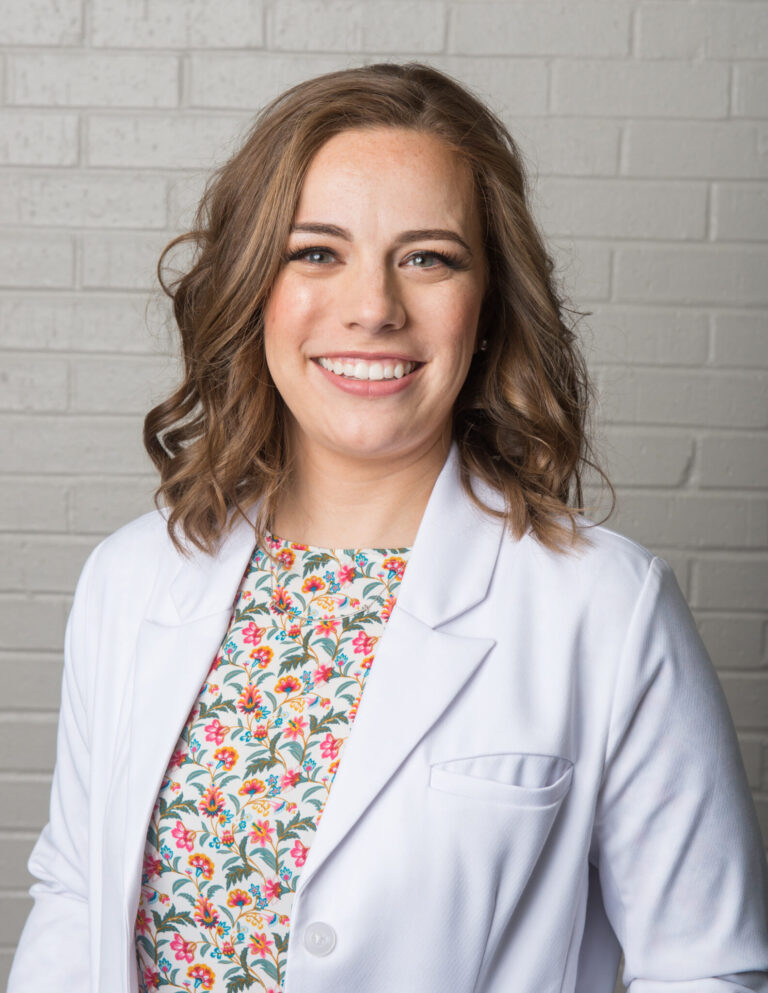
“I started taking airway seriously when I realized how often the upstream anatomy — tongue posture, palate width, lingual frenum — showed up in my adult patients who were tired, clenching, grinding, or already on CPAP. Those patterns aren’t new, but dentistry hasn’t always looked at them as part of its job.
“I’ve completed airway-focused orthodontic training under Dr. Ed Lipskis, DDS, MS, at The Centre for Integrative Orthodontics in Saint Charles, Illinois. Dr. Lipskis’s Airway Focused Orthodontics course has been running annually since 2018 and is where much of the Midwest’s airway-trained dentistry comes from. That training shaped how I screen, what I look for, and when I refer.
“Separately, I’ve trained at The Breathe Institute with Dr. Soroush Zaghi — that’s the frenectomy and functional-frenuloplasty lineage. It’s related, because the tongue is an airway organ, but it’s distinct. I want to be clear about which training applies where, because scope accuracy is how patients actually get helped.
“An airway screening at IDW isn’t a sales funnel into a treatment I’m going to perform. It’s an evaluation. Sometimes we find something dental we can help with. Often we find something that belongs with your sleep physician, an ENT, or a myofunctional therapist. Either way, you’ll leave with a clear written summary and a specific next step.”
“The name of the practice reflects this, by the way. Inspire comes from the Latin inspirare — to breathe. That’s not a marketing flourish; it’s the lens I built the office around. Airway screening isn’t a sub-service at Inspire Dental Wellness. It’s the reason we’re called what we’re called.”
— Dr. Erica Zolnierczyk, DMD
Technology We Use in an Airway Screening
A clinical airway exam uses the eyes and the hands first. Imaging and questionnaires come in when they add information the exam can’t.
Clinical airway exam
Tongue-posture-at-rest, Mallampati score, palate vault assessment, lingual frenum function, TMJ screen, nasal breathing patency.
Epworth Sleepiness Scale
A validated patient-reported screening tool that quantifies daytime sleepiness across eight everyday situations (reading, watching TV, sitting in traffic, etc.). High scores correlate with sleep-disordered breathing risk and inform whether a sleep study is warranted. We may also use STOP-BANG (Snoring, Tired, Observed-pauses, Pressure, BMI, Age, Neck circumference, Gender) when broader risk-factor scoring fits the clinical picture. Both tools are screening, not diagnosis. Read more at the American Academy of Sleep Medicine →
Cone Beam CT (CBCT)
A low-dose dental CT that visualizes airway volume, nasal cavity, maxillary sinuses, and skeletal anatomy in three dimensions. CBCT shows what 2D panoramic imaging can’t. Used selectively, only when findings warrant. Read about our technology →
Who This Is For — and Who It Isn’t For
This is a good fit if you
- Are an adult with symptoms of sleep-disordered breathing who wants a dental-side evaluation of contributing anatomy
- Have a sleep apnea diagnosis and want to understand the root cause
- Are CPAP-intolerant and looking for what’s upstream of the airway issue
- Are being evaluated for frenectomy or functional orthodontics and want airway context folded into the plan
- Have a sleep physician who’s asked about contributing dental/skeletal anatomy
This isn’t the right fit if you
- Are looking to get an oral appliance (MAD) fitted today — we refer for that
- Want a CPAP prescription or titration — that’s physician scope
- Are seeking a sleep study in our office — we coordinate but do not perform sleep studies
- Have an acute or urgent sleep-medicine concern — please see your physician or an emergency provider
Benefits and Financing
Many patients use their dental benefits here. Inspire Dental Wellness is independently owned and operated and not contracted with dental plans — a deliberate choice that lets us spend the time and use the tools that match how we believe airway-focused dentistry should be practiced, without insurance approval driving the treatment plan.
Most patients still use their dental benefits to offset part of care. Our team will review your coverage with you ahead of the visit, prepare the documentation, and walk you through what your share is expected to be. For patients who want financing flexibility, we partner with CareCredit, a third-party healthcare financing company.
Specifics — what’s covered under your plan, what’s out-of-pocket, what the financing options look like — are reviewed at consultation. We don’t quote fees on this page because the right evaluation starts with understanding your specific airway picture, not a line item.
It applies to cleanings, exams, and routine preventive care — not to airway screening consultations or specialty referrals. Learn more →
Airway Screening in Orland Park — and the Surrounding Suburbs
Inspire Dental Wellness is at 14512 John Humphrey Drive, Orland Park, IL 60462 — easily accessible from Tinley Park, Homer Glen, Palos Heights, Palos Park, Oak Forest, Mokena, Frankfort, and the surrounding south-suburban communities of the Chicago metro area. See all areas we serve →
Office hours: Mon 8–5 · Tue–Thu 7–3
Frequently Asked Questions About Sleep Apnea and Airway Dentistry
Can a dentist diagnose sleep apnea?
No. A sleep apnea diagnosis is made by a sleep medicine physician, typically after a sleep study. What an airway-trained dentist can do is screen for the anatomical and functional contributors — tongue posture, palate shape, lingual restriction, jaw position — that often sit upstream of the condition. We provide a written findings summary you can take to your physician. Diagnosis is their scope; screening is ours.
Do you fit oral appliances (MADs) at IDW?
No, we don’t fit oral appliances here. When your sleep physician prescribes a mandibular advancement device and you choose appliance therapy, we refer to a dental sleep medicine specialist who focuses on fitting and titrating oral appliances. That specialization matters — MAD fitting is a distinct clinical discipline, and scope accuracy is part of how we protect our patients.
Do I need a sleep study before you’ll see me?
No. We screen first. The screening visit is designed to flag whether a sleep study is warranted — and to identify dental-scope contributors that matter regardless of whether you pursue one. If our findings suggest a sleep study would add context, we’ll tell you, and we’ll refer to a sleep physician who can order one.
Is airway dentistry a CPAP alternative?
No, and it’s important to say so clearly. Airway dentistry addresses root-cause anatomy — what in the mouth, tongue, and jaw may be contributing to an airway issue. It is not an alternative to a diagnostic sleep study, a CPAP prescription, or oral appliance therapy when those are clinically indicated. For patients already on CPAP, airway dentistry can help clarify the upstream contributors and coordinate with your physician on a broader care plan.
Will my insurance cover an airway screening?
If you have dental insurance, there’s a good chance you can use it here. Our concierge team reviews your benefits ahead of your visit and prepares the documentation you need for your plan. We’re not contracted directly with insurance companies, and specifics of what’s covered vary by plan — both are reviewed at consultation.
I was diagnosed with sleep apnea years ago and I’m on CPAP. What can you do?
Plenty — if you want to understand the why. Many adults on long-term CPAP have never been evaluated for the anatomical contributors driving their airway collapse. A screening at IDW can identify whether things like lingual restriction, palate narrowing, or tongue-posture dysfunction are part of the picture. Sometimes those findings matter for long-term management, quality of life, or reducing CPAP pressure needs under your physician’s direction.
Is sleep apnea connected to tongue tie?
The tongue is an airway organ. When a restricted lingual frenum prevents the tongue from resting on the palate, the tongue can sit lower in the mouth and back toward the airway — a pattern that shows up in many adult sleep-disordered-breathing cases. Research led by Dr. Soroush Zaghi and others has documented this connection. For adults, an airway screening often pairs with an evaluation for functional frenuloplasty when appropriate. Learn more →
Do you offer the Inspire sleep apnea implant?
No. Inspire is an implanted device for obstructive sleep apnea made by Inspire Medical Systems, and it’s placed by ENT surgeons, not dentists. Inspire Dental Wellness is an independent dental practice and isn’t affiliated with Inspire Medical Systems; our name comes from the Latin inspirare, “to breathe.” If you’re exploring the implant, your sleep physician or an ENT is the right place to start. If you’d also like an airway-focused dental screening, we’re glad to coordinate with your physician.
What happens if the screening finds something?
You leave with a written summary and a specific next step — often a referral to a sleep physician for a sleep study, to an ENT for nasal evaluation, or to a myofunctional therapist for tongue-posture rehab. When we find contributors we can treat directly — like a restricted lingual frenum or a jaw-position issue — we’ll talk through what a dental-scope plan would look like and how it fits with the rest of your care team.
Ready for a Clear Picture of What’s Driving Your Sleep?
An airway screening gives you a written findings summary, a specific next step, and a coordinated plan across the specialists who belong in your care team.
Mon 8–5 · Tue–Thu 7–3 · 14512 John Humphrey Drive, Orland Park, IL 60462