
Infant Frenectomy for Newborns & Babies in Orland Park, IL
Gentle laser tongue tie and lip tie release for infants — supporting your baby’s breastfeeding journey, comfort, and growth.

Dr. Erica shadowed Dr. Bobak Ghaheri — an ENT known for infant tongue-tie & breastfeeding care — in Portland, OR.
Functional frenuloplasty at The Breathe Institute (Dr. Soroush Zaghi).
LightScalpel release — minimal bleeding and, in most cases, no sutures.
A mom of two children with frenectomies who coordinates with your lactation consultant.
Worried about your baby’s latch, feeding, or weight gain? The first step is a hands-on evaluation in Orland Park — we’ll tell you honestly whether a release is indicated, and we won’t rush you into one.

Watch Nicole’s story → — a parent shares her family’s infant frenectomy experience at our office.
Infant frenectomy is the gentle release of a tongue tie or lip tie — a tight band of tissue that can restrict your baby’s mouth movement and, in some cases, interfere with breastfeeding, weight gain, and sleep. Whether a frenectomy is the right call depends on a clinical evaluation that considers both anatomy and function. This page walks through how Dr. Erica evaluates infants, what an infant frenectomy looks like at our office, and what recovery typically involves in the first two weeks.
If your newborn is struggling to latch, making clicking sounds during feeds, or your nipples are cracked and painful despite correct positioning, a tongue tie or lip tie may be the reason.
At Inspire Dental Wellness, Dr. Erica Zolnierczyk evaluates infants for tongue and lip ties using a hands-on functional assessment. When release is indicated, she performs it with the LightScalpel CO2 laser — a precise, gentle approach that means minimal bleeding, no sutures needed in most cases, and most babies can nurse or feed within minutes afterward.
Dr. Erica is a general dentist with specialized training in infant frenectomy — she traveled to Portland, Oregon to shadow Dr. Bobak Ghaheri, an ENT widely respected for his work with infant tongue tie and breastfeeding support. She is also the mother of two children with frenectomies — she understands both the clinical perspective and the 3 AM worry that brings parents to seek help.
This page walks through what infant frenectomy looks like, what to expect before and after release, and the aftercare that supports healing. For kids older than 1 year, see our kids frenectomy page; for adults see adult frenectomy.
What Is a Tongue Tie or Lip Tie in Infants?
A tongue tie (ankyloglossia) is a condition where the lingual frenulum — the band of tissue under the tongue — is shorter, thicker, or tighter than typical. This can restrict how far the tongue can lift, extend, or move side to side. When a tongue tie restricts movement significantly, it can make feeding difficult.
A lip tie is a similar restriction of the labial frenulum, the tissue connecting the upper lip to the gums. Lip ties often occur together with tongue ties and can compound feeding difficulty when both are present. If it is specifically the upper lip you are looking at, our guide to baby lip tie walks through what to look for in newborns and infants.
Not all newborns with a visible frenulum need treatment. Some infants with short or visible frenums have no functional restriction and feed normally. Others with less-visible ties have significant functional restriction. That’s why clinical evaluation — not appearance alone — determines whether frenectomy is appropriate.
Types of Ties We Evaluate
Anterior Tongue Tie. A tie visible at or near the tip of the tongue. You may see a classic “heart-shaped” notch when the baby cries or extends the tongue. Anterior ties can restrict feeding function.
Posterior Tongue Tie. A tie deeper in the mouth, hidden under the mucosal tissue at the base of the tongue. Posterior ties are often missed on visual inspection alone but can restrict function just as much as anterior ties. Dr. Erica evaluates for these with a functional assessment, not appearance alone.
Lip Tie. Restricts the upper lip’s ability to flange (turn outward) during breastfeeding, which many infants compensate for by working harder to create a seal.
Signs Your Infant May Have a Tongue or Lip Tie
Only a clinical examination can confirm a tongue or lip tie — the symptoms below are what families commonly describe when ties are later diagnosed, but they can have many other causes. This list is educational, not diagnostic.
Common Signs Infants Display
- Difficulty latching or unable to open mouth wide enough to latch
- Clicking, popping, or smacking sounds during nursing or bottle feeding
- Falls asleep at the breast before finishing a full feed
- Fussiness during feeds, pulling away repeatedly, or seeming frustrated
- Slow or inadequate weight gain — not meeting growth curve expectations
- Excessive gas, colic-like symptoms, or reflux-like behavior from swallowing air through a poor seal
- Milk dribbling from the corners of the mouth during feeding
- Strong preference for one breast over the other
- Poor latch even after lactation consultant feedback on positioning
Common Maternal Symptoms
- Nipple pain, pinching, creasing, or blanching (turning white after feeds)
- Cracked, blistered, or bleeding nipples despite correct latch positioning
- Sensation that baby is chewing or compressing rather than sucking
- Plugged ducts, recurring mastitis, or blocked milk ducts
- Low milk supply — often secondary to inefficient transfer rather than production problem
- Exhaustion, frustration, or feeling that breastfeeding should not be this painful
This list is educational and not a diagnosis. Only a clinical evaluation can confirm whether a tongue tie or lip tie is present and whether frenectomy is appropriate for your infant. Symptoms can have many causes. A consultation with Dr. Erica helps clarify what’s happening with your baby.
Laser Frenectomy for Infants: Our Approach
Why We Use the LightScalpel CO2 Laser for Infant Release
Dr. Erica performs infant frenectomies exclusively with the LightScalpel CO2 laser. We do not use scissors on infants.
The LightScalpel CO2 laser vaporizes tissue with precision while simultaneously sealing blood vessels as it cuts. This means:
- Minimal bleeding: The laser seals small vessels as it cuts; bleeding is typically minimal in our experience.
- No sutures needed in most cases: The laser seals tissue edges; stitches are rarely required.
- Reduced tissue disruption: The laser creates a narrower zone of heat effect than scissors or diode lasers, which supports faster healing and less inflammation.
- Designed to reduce tissue trauma: The laser’s narrower zone of heat effect is intended to reduce swelling and support a smoother recovery.
The technology matters. We use the CO2 laser for infant frenectomy because of its precision and minimal tissue disruption.
What Happens During the Release
The release itself takes approximately 1 to 2 minutes of active laser time. A topical anesthetic is applied to minimize discomfort. Your infant will be held safely by a staff member. Dr. Erica will release the restrictive tissue with precision, and then you are encouraged to nurse or bottle-feed your baby right away — most infants do this within minutes.
Safety and Precision
Many parents worry about laser use with infants. The LightScalpel CO2 laser is designed for oral tissue and has been used in pediatric and infant frenectomy for years. In our experience, its precision and minimal bleeding make it well-suited to the delicate oral anatomy of a newborn.
How We Evaluate for Tongue Tie and Lip Tie in Infants
A consultation visit (typically 30 to 45 minutes) which may include:
Functional Assessment
Rather than relying on appearance alone, Dr. Erica performs a hands-on evaluation of your infant’s tongue mobility. She assesses:
- Tongue elevation (can the tongue reach toward the palate?)
- Tongue extension (how far can the tongue come out?)
- Lateral movement (can the tongue move side to side?)
- The floor-of-mouth restriction (does the tissue under the tongue limit lift?)
Feeding Observation
Dr. Erica watches your infant latch and feed (whether breast or bottle) to see if restriction is affecting function in real time.
Lip Tie Evaluation
We evaluate both upper and lower lip ties, as they often co-occur with tongue ties and compound feeding difficulty.
Our Recommendation
At the end of the evaluation, Dr. Erica will tell you clearly:
- Whether she identifies a restriction
- Whether that restriction is affecting feeding function
- Whether she recommends frenectomy now, or whether further monitoring makes sense
If release is not indicated, she will tell you that directly. Not every baby with a visible frenulum needs a release.
If Release Is Recommended — What Happens Next
Dr. Erica does not perform the release at the consultation. If she recommends moving forward, we teach you the post-release stretches at the end of this visit — on your actual baby, so you know exactly how they feel. You’ll take home written instructions and video references, practice the stretches daily, and return for a separate release visit once you’re confident with the technique. The next section explains why this two-visit approach matters.
Preparation for Infant Frenectomy — Why Consultation and Release Are Separate Visits
Older children and adults typically spend weeks in myofunctional therapy and bodywork before a release. Infants don’t — their muscles are still developing, and they haven’t yet built years of compensatory patterns.
That doesn’t mean there’s no preparation. The preparation just looks different, and it happens at home between visits.
Why Dr. Erica splits the consultation and the release into two visits: Post-release stretching is the single most important factor in a successful release — more important than the laser, the operator, or any other variable. If stretches aren’t done correctly during the first 2 to 4 weeks, the released tissue can reattach, which can mean a second release. Asking parents to learn the technique and perform it well on the same day the release happens — while their baby is tender, sensitive, and freshly post-procedure — is the wrong time to learn. So we separate the two visits on purpose.
Visit 1 — Consultation
- Functional evaluation of tongue and lip mobility
- Clear recommendation
- If release is indicated: we teach you the aftercare stretches directly on your baby so you know exactly how they feel
- You go home with written instructions and, where helpful, video references
Between Visits — At Home
- You practice the stretches daily on your infant, building the muscle memory and confidence you’ll need after the release
- Any questions or refinements you notice can come to the release visit
Visit 2 — Release
- We start by watching you perform the stretches; if anything needs refinement, we coach you through it
- Only once you’re comfortable and confident does Dr. Erica proceed with the release
- Aftercare walk-through with the actual healing site before you leave
What this two-visit approach is designed to do: put your family in the best possible position to do aftercare well. In Dr. Erica’s clinical experience, families who arrive at the release visit already fluent in the stretch technique have a smoother 2-to-4-week recovery.
What to Expect at Your Infant’s Release Visit
By the time you arrive for the release visit, you’ve completed the consultation and have been practicing the aftercare stretches at home. The release visit itself is short and focused.
- Arrival and Stretch Technique Review We confirm consent and review the functional findings from your consultation. Then we watch you perform the aftercare stretches on your infant to make sure you’re comfortable with the technique. If anything needs refinement, we coach you through it before the release. We don’t proceed until you’re ready.
- The Release (1–2 Minutes) A topical anesthetic is applied to the area. Your infant will be positioned safely and held gently. Dr. Erica uses the LightScalpel CO2 laser to release the restrictive tissue with precision. The entire active laser time is approximately 1 to 2 minutes.
- Immediate Feeding You nurse or bottle-feed your baby right away. Most infants latch within minutes. Some show immediate improvement in latch or comfort; others take a few days to adjust to their new range of motion. Both responses are normal.
- Aftercare Walk-Through Before you leave, we walk through the stretching routine one more time — this time with your infant’s actual release site visible — so you know exactly what to do and what healing should look like over the first 72 hours.
If both tongue and lip ties are present, both are released in the same visit. There’s no need for a separate release appointment for each.
Recovery and Aftercare After Infant Frenectomy
First 72 Hours
- Soft foods (breast milk, formula, or expressed breast milk if bottle feeding)
- Gentle stretching begins immediately — typically 2 to 3 times daily
- Many infants show minimal discomfort; some fussiness is normal, particularly during stretches
- Over-the-counter infant pain relief (acetaminophen or ibuprofen) if your pediatrician approves and your infant seems uncomfortable
Weeks 2 Through 4
- Continue gentle stretches daily (2 to 3 times, for 1 to 2 minutes each)
- Resume normal feeding as tolerated — most infants return to full feeds within a few days
- Follow-up visit at 2 weeks to check healing and stretching technique
- Follow-up visit at 4 weeks to confirm the release has held and healing is complete
Why Stretches Matter
The mouth heals quickly. Without gentle stretches during the first 2 to 4 weeks, the released tissue can reattach — which would require a second release. Stretches are the single most important part of aftercare.
What to Watch For
- Healing site should be clean and pinkish; any signs of infection should prompt a call to our office
- If you notice the site closing back up or reattachment appearing, contact us immediately
Feeding Improvements
Many families report that infants show changes in feeding patterns and comfort within the first 1 to 2 weeks. Weight gain trajectories often improve, though timing varies by individual. Not every baby shows dramatic immediate change; some improvements unfold gradually over 4 to 6 weeks.
Who Infant Frenectomy Is For — and When to Pause
Likely a Good Candidate If:
- Functional assessment confirms a restrictive tongue or lip tie
- Feeding is being affected (latch difficulty, weight gain concerns, maternal pain)
- Your pediatrician or lactation consultant supports evaluation
- You’re ready to do the post-release stretches consistently for 2 to 4 weeks
Hold Off If:
- No functional restriction is found (visible frenulum alone isn’t enough reason to release)
- Feeding is going well and your infant is gaining weight appropriately
- Your infant has active oral infection or uncontrolled thrush
- You’re not able to commit to the stretching routine
If you’re not sure which category applies to your infant, that’s exactly what the evaluation visit is for. Dr. Erica will tell you honestly whether release is the right move for your baby.
Meet Your Provider: Dr. Erica Zolnierczyk, DMD — Provider and Parent

I trained in functional frenectomy because I lived it as a parent. Both of my children were born with tongue ties.
My first baby had his release within the first month, performed by a trusted colleague. As a new mom, I wasn’t emotionally ready to be the one doing it — I actually teared up during the appointment, even knowing it was the right call. If you’re a parent feeling nervous about bringing your baby in, that feeling is normal. You’re not alone in it.
My second child, I was ready. I released him myself just a few days after birth.
That combination — patient, parent, and provider — is how I understand what you’re going through. I know what it’s like to watch a newborn struggle to latch. I know the panic of “is my baby okay?” I know what it feels like when feeds are painful and you’re exhausted. And I know what it’s like to see a baby come alive once that restriction is gone and they can feed comfortably.
To bring infant frenectomy care in-house for families here in Orland Park, I traveled to Portland, Oregon to shadow Dr. Bobak Ghaheri — an ENT widely respected for his work with infant tongue tie and breastfeeding support. I learned directly from his evaluation style, his laser technique, and the way he works with families through the entire process. That time in Portland shaped how I approach infant frenectomy today.
Credentials & Training
- DMD, licensed general dentist in the state of Illinois
- Specialized training in infant frenectomy — shadowed Dr. Bobak Ghaheri in Portland, Oregon
- Trained on the LightScalpel CO2 laser for infant and pediatric frenectomy
- Mother of two children with frenectomies
- Ongoing continuing education in airway, pediatric health, and myofunctional medicine
Infant Frenectomy in Orland Park — Serving Chicago-Area Families
Our office is located at 14512 John Humphrey Drive, Orland Park, IL 60462 — just off LaGrange Road, minutes from Orland Square Mall. Easy to find, plenty of free parking.
Because infant frenectomy care isn’t available everywhere, families travel to us from well beyond our neighborhood. We see infants and families from Orland Park, Tinley Park, Homer Glen, Palos Park, Palos Heights, Mokena, Frankfort, throughout the south suburbs, and from Chicago, Naperville, and the greater Chicagoland area.
For families searching for an infant laser frenectomy in Chicago or a newborn tongue tie release in the Chicagoland area, our Orland Park office is roughly 30 to 40 minutes from downtown Chicago — a manageable drive for newborn tongue-tie care that isn’t widely offered even within the city. We regularly see infants whose parents travel in from West Loop, South Loop, Lincoln Park, Logan Square, and other Chicago neighborhoods, along with Naperville, Aurora, and the western suburbs. Infant tongue-tie and lip-tie care from a provider trained and certified in functional frenuloplasty at The Breathe Institute, with the consultation and release scheduled as separate visits and coordinated with lactation support, isn’t something every dental practice offers.
We’ve also cared for newborns and babies whose families made the trip from southern Illinois, the South Bend area in Indiana, and across Michigan — they come because this kind of infant frenectomy care isn’t widely available. See all areas we serve →
Office hours: Mon 8–5 · Tue–Thu 7–3
Insurance and Financing for Infant Frenectomy
Your infant’s care is personal, and so is the path to pay for it. We build your care plan around your specific case, walk you through every option at your consultation, and make sure you’re comfortable with the plan before we begin.
Insurance, Handled by Our Team
Infant frenectomy can qualify under medical or dental coverage depending on how the case is documented — feeding difficulties in newborns and infants are a common angle for medical coverage. Our team takes that legwork on for you. We review your benefits before your appointment, coordinate with your plan, and prepare the medical documentation when that’s the right path. You focus on your infant’s care; we handle the paperwork.
We’re not contracted with any dental or medical plan, which means our treatment recommendations are always based on what’s best for your baby — not on what a plan will authorize. That said, we don’t want paperwork to stand between you and care. Our team reviews your benefits ahead of your visit, prepares the documentation, and walks you through what your plan is likely to reimburse so there are no surprises.
CareCredit Financing
If you’d like to spread payments out, we partner with CareCredit, a third-party healthcare financing company that offers monthly payment plans for qualifying families. Applications are handled directly with CareCredit.
HSA and FSA Accounts
Infant frenectomy is typically an HSA- or FSA-eligible expense, which gives families a tax-advantaged path to cover treatment.
Call us at (708) 460-6699 — our front desk will verify your specific plan benefits. View all financing options →
What Families Tell Us After Infant Frenectomy
Individual results vary. These stories reflect specific patient experiences and are not a guarantee of outcome.
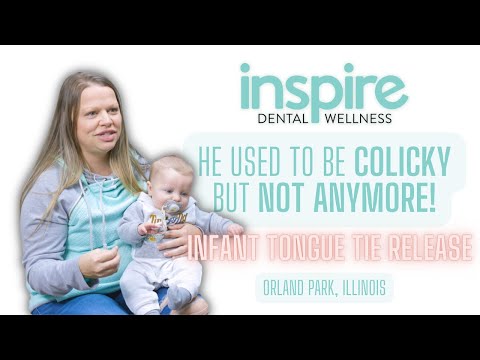
Amber & Beckett
“He latched without pain right after his procedure.”

Painful breastfeeding, solved
A mother shares the difference after her infant’s release.

Katrina & Nolan
“He had the surgery at about a month old. Ever since, he took bottles perfectly — no problems.”
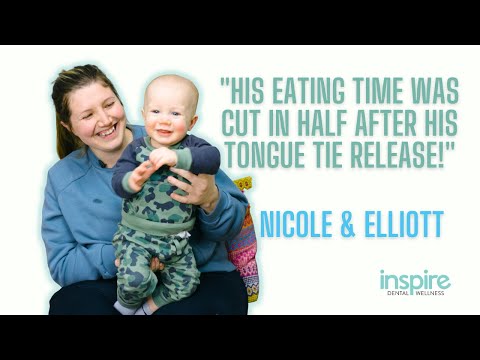
Nicole & Elliott
“He gained a lot of weight in a week. That shows you how restricted he was.”
“I noticed such a big change in Hayden after his frenectomy.”Hayden — Age ~1 month at release
“Beckett’s feeding improved right after his frenectomy.”Beckett — Age ~3 months at release. Amber brought him in concerned about a suspected tongue tie affecting nursing; Beckett had been struggling to latch and was experiencing colic.
“We noticed a meaningful difference after his frenectomy.”Wyatt — Age ~4 months at release. Paige sought help with latching issues; Dr. Erica’s evaluation identified an upper lip tie, posterior tongue tie, and bilateral cheek ties.
“He had the surgery when he was about a month old, and ever since then he took bottles perfectly. No problems. He’s hitting all the milestones.”Nolan — Age ~1 month at release. Katrina brought him in for lip and tongue tie that was preventing latching and proper bottle feeding. The family continues to come every 2–3 months for ongoing care.
“He was very colicky and had a very hard time breastfeeding — he would eat for over an hour and was leaking a lot. He wasn’t gaining weight. He gained a lot of weight in a week after the procedure. For colic he was night and day different.”Elliott — Released as an infant for lip and tongue tie. Nicole was referred to Inspire by a co-worker at Westside Children’s Therapy. Her advice to other parents: “If you have any suspicions something’s not right, go with your gut and get an assessment.”
Frequently Asked Questions About Infant Frenectomy
What is a tongue tie in an infant?
Tongue tie (ankyloglossia) is a condition where the lingual frenulum — the band of tissue connecting the underside of the tongue to the floor of the mouth — is shorter, thicker, or tighter than typical. This can restrict the tongue’s range of motion. Tongue ties range from obvious anterior ties visible at the tongue tip to subtle posterior ties hidden further back that are often missed on visual inspection alone.
How do I know if my infant needs a frenectomy?
Common signs include difficulty latching, clicking sounds during feeding, slow weight gain, excessive fussiness during nursing, and nipple pain or damage in the mother. If multiple symptoms are present and persist despite working with a lactation consultant on positioning and latch technique, a functional tongue tie evaluation is recommended. Not every baby with a visible frenulum needs a release — the decision is based on whether the restriction is actually affecting feeding function.
Should I release my baby’s tongue tie if there’s also a lip tie?
Tongue ties and lip ties frequently occur together. When both are present, the feeding difficulty is usually worse than either condition alone. If both a tongue tie and a lip tie are contributing to feeding problems, Dr. Erica releases both during the same appointment — there’s no need for separate visits. She evaluates both structures during every consultation and will recommend release only for the ties that are actively causing functional issues.
Will the release be done at my baby’s first visit?
No. Infant frenectomy at our office is always a two-visit protocol — a consultation first, and a separate release visit once you’re confident with the aftercare stretches. Even though infants don’t need the myofunctional preparation older patients do, Dr. Erica teaches parents the post-release stretching technique at the consultation so you can practice at home before the release. This gap is intentional: stretch technique is the single biggest factor in preventing reattachment, and Dr. Erica won’t rush it.
How long does an infant frenectomy take?
The laser release itself takes approximately 1 to 2 minutes. Each of the two visits — the consultation and the release visit — is typically 30 to 45 minutes. The release visit includes a stretch-technique review, the laser release, immediate feeding, and an aftercare walk-through.
Can my baby breastfeed right after the release?
Yes. Most babies nurse or bottle-feed within minutes of the release. Some show immediate latch improvement; others need several days to adjust to their new tongue mobility. Both responses are normal. If breastfeeding does not improve within two weeks, we recommend a follow-up session with a lactation consultant experienced in post-frenectomy care.
Is a laser frenectomy painful for my infant?
A topical anesthetic is applied before the release to minimize discomfort. The LightScalpel CO2 laser causes less tissue disruption than scissors or diode lasers, which means less inflammation and a more comfortable recovery. Most babies cry briefly during the release and settle within minutes — often as soon as they begin nursing. Some fussiness over the following days is normal, particularly during aftercare stretches.
What happens if a tongue tie is not treated?
Untreated tongue ties can lead to ongoing breastfeeding difficulty, poor weight gain, early weaning, and maternal pain that may lead to giving up breastfeeding. As the child grows, an untreated tie can contribute to speech articulation challenges, feeding difficulties from limited tongue mobility, and in some children mouth breathing patterns. If you’re looking ahead at how tongue restriction can shape long-term development, our airway-focused dentistry overview walks through how we evaluate breathing, jaw growth, and sleep patterns in growing kids. However, not every tongue tie causes all of these issues, and treatment decisions should be based on functional impact, not anatomy alone.
Does insurance cover infant frenectomy?
Coverage varies by plan and by how the case is documented. Medical plans tend to recognize infant frenectomy — including newborn releases — more readily than dental plans, particularly when the release addresses documented breastfeeding or feeding difficulties. We’re not contracted with any dental or medical plan, but our team reviews your benefits ahead of your visit and prepares the documentation so you know where you stand before your appointment. What your plan covers and what your out-of-pocket investment looks like are reviewed at the consultation.
Should my baby get a frenectomy?
Whether an infant frenectomy is appropriate depends on a clinical evaluation that considers both the anatomy of the frenulum and how feeding, weight gain, and comfort are being affected. Some infants with a visible tongue or lip tie feed without difficulty and don’t need treatment; others with less-visible restriction have significant functional impact and may benefit from release. A consultation with Dr. Erica is the way to know.
How long does a frenectomy take to heal in babies?
Initial surface healing for an infant laser frenectomy typically occurs within one to two weeks, though individual recovery timelines vary. The first 24 to 72 hours involve the most discomfort for most babies. Aftercare stretches during the post-op window are an important part of recovery — they’re aimed at discouraging the released tissue from reattaching. The specifics for your baby are reviewed at the release visit.
What is the youngest age for a frenectomy?
There isn’t a strict minimum age. Dr. Erica evaluates infants from the newborn period forward when there’s a clinical reason — typically when breastfeeding difficulty has been identified by a lactation consultant or pediatrician and a tongue or lip tie is suspected. The decision is functional, not strictly age-based. Some babies are evaluated within the first few weeks of life; others later, depending on when feeding concerns surface.
Do I need a referral to schedule an infant frenectomy evaluation?
No referral is required. Many families come to us after a lactation consultant or pediatrician raises the question, and we are glad to coordinate with them, but you can call (708) 460-6699 directly to schedule an evaluation.
Where can I get an infant tongue tie evaluation near Chicago?
For families in Chicago or the Chicago suburbs searching for an infant laser frenectomy or a newborn tongue tie release, our Orland Park office is roughly 30 to 40 minutes from downtown — accessible from neighborhoods including West Loop, South Loop, Lincoln Park, and Logan Square, as well as Naperville, Aurora, and other western suburbs. Dr. Erica is trained and certified in functional frenuloplasty at The Breathe Institute (Dr. Soroush Zaghi), and for infants schedules the consultation and release as separate visits coordinated with lactation support. Schedule a consultation or call (708) 460-6699.
Is Your Infant Struggling with Breastfeeding?
If your newborn or baby is having difficulty latching, not gaining weight as expected, or your nipples are cracked and painful, a tongue tie or lip tie may be the reason. A simple evaluation with Dr. Erica can clarify what’s happening and whether frenectomy would help. There’s no pressure to proceed — the evaluation is about getting you answers so you can make the best decision for your family.
Dr. Erica Zolnierczyk, DMD · Specialized training with Dr. Bobak Ghaheri · 14512 John Humphrey Drive, Orland Park, IL 60462
Dr. Erica Zolnierczyk is a licensed general dentist in the state of Illinois providing infant frenectomy and tongue tie release services. She is not a pediatrician or oral surgeon.