
Adult Frenectomy in Orland Park, IL — Tongue Tie, Lip Tie & Buccal Tie Release
A preparation-first protocol for adults: myofunctional therapy and bodywork before the release, a precise CO2 laser or surgical-scissor release with Dr. Erica, and structured recovery afterward.
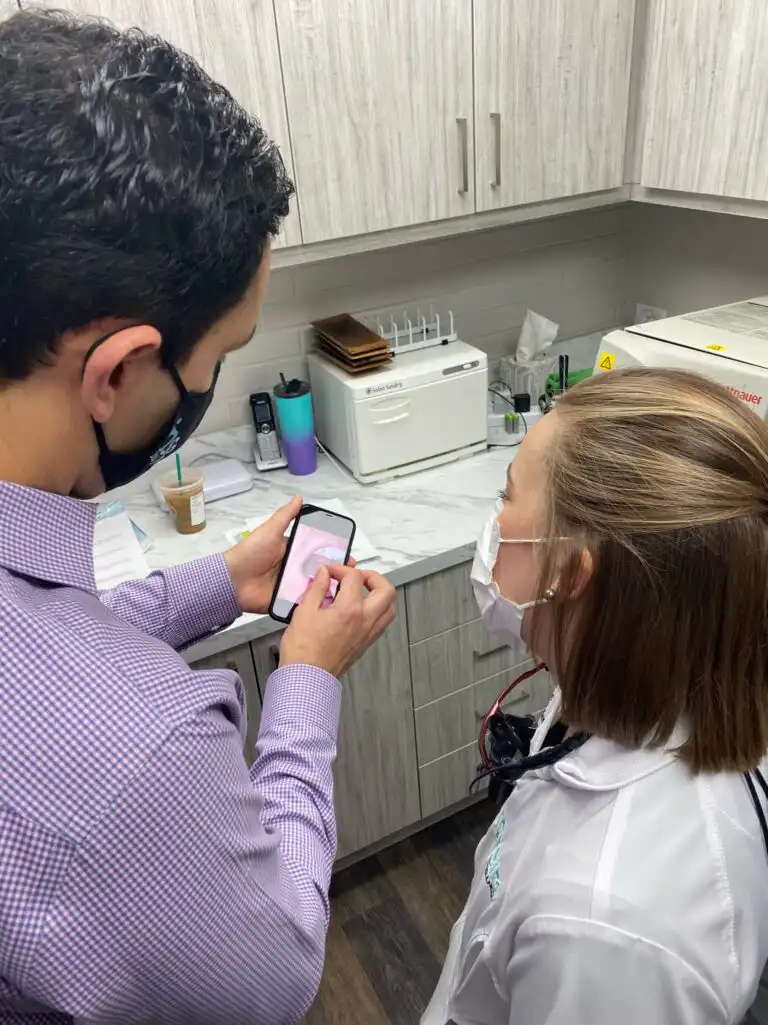
You’re not imagining it. If the tongue tie nobody caught when you were two is still there, it may still be pulling on your jaw, restricting your airway at night, and making your neck and shoulders work harder than they should. At Inspire Dental Wellness in Orland Park, we treat tongue, lip, and buccal ties in adults using the functional frenuloplasty protocol developed by Dr. Soroush Zaghi at The Breathe Institute — the approach Dr. Erica trained in directly.
What Is an Adult Frenectomy?
A frenectomy is the release of a restrictive band of tissue — called a frenum — in the mouth. Adults typically have one or more of three types of restriction, and many have lived with them their entire lives without knowing.
Tongue Tie Release (Lingual Frenectomy)
A lingual frenectomy releases the frenum under the tongue. When this band is too tight, thick, or short, your tongue can’t reach the roof of your mouth or move freely from side to side. Many adults with a restricted tongue may spend years compensating without knowing it — through jaw posture, neck tension, or mouth breathing.
Lip Tie Release (Labial Frenectomy)
A labial frenectomy releases the frenum that connects the upper (or sometimes lower) lip to the gums. In adults, a lip tie can contribute to gum recession, a persistent gap between the front teeth, chronic lip tension, and difficulty fully closing the mouth at rest — which has downstream effects on breathing and oral health.
Buccal Tie Release
Less commonly discussed but clinically significant, a buccal tie is a restrictive band along the inside of the cheek. In adults, buccal ties can contribute to jaw tension, chewing fatigue, and asymmetric muscle patterns on one side of the face. Many adults don’t realize they have them until a thorough exam identifies the restriction.
Frenectomy vs. Functional Frenuloplasty — What’s the Difference?
A traditional frenectomy removes the visible frenum. A functional frenuloplasty — the technique Dr. Soroush Zaghi developed and teaches at The Breathe Institute — goes further: it releases the frenum and the fascia layer beneath it, which is often where the real restriction lives in adults. For grown patients with decades of compensation built into their tongue, lip, and jaw mechanics, this deeper release is often what’s needed to support restored function. Dr. Erica trained directly with Dr. Zaghi in this protocol and uses it for adult releases at Inspire Dental Wellness.
Do I Actually Have an Adult Tongue Tie? Symptoms & Self-Assessment
Adult tongue tie often goes undiagnosed for one simple reason: you’ve always had it. The symptoms feel like “just how your body is.” They show up not in your mouth alone, but across your jaw, neck, sleep, speech, and even posture. Here’s what to look for.
Oral & Jaw Signs
- Your tongue can’t reach the roof of your mouth comfortably
- Your tongue can’t stretch past your lower lip
- You notice a heart-shaped notch at the tip of your tongue when you stick it out
- Your jaw clicks, pops, or locks
- You wake up with jaw tension or clenching
- You breathe through your mouth at rest or during sleep
- Persistent gap between your front teeth that orthodontics hasn’t resolved
Body Signs
- Chronic neck and shoulder tension that massage or PT only temporarily relieves
- Forward head posture (your head sits in front of your shoulders)
- Tension headaches behind the eyes or at the base of the skull
- TMJ pain or dysfunction
- Upper back or scapular tension
Sleep Signs
- Snoring, especially on your back
- Waking unrefreshed even after 7–8 hours of sleep
- Diagnosed sleep apnea or upper airway resistance syndrome (UARS)
- Sleep worsens when you try to sleep on your back
- Night clenching or grinding (often diagnosed via worn or chipped teeth)
Speech & Eating Signs
- Certain letters have always been a struggle (“l,” “r,” “s,” or “th”)
- You chew slower than most people or tire while eating
- You have trouble finishing big pieces of food
- Public speaking makes your tongue feel heavy or slurred on long words
Your Self-Assessment
If you answered yes to 3 or more of the signs above, there’s a real possibility a tongue, lip, or buccal tie is contributing. That doesn’t automatically mean you need a release — it means a thorough evaluation is worth your time.
We use the Kotlow classification (Grades 1 through 4) to assess severity during your visit, along with a functional evaluation that looks at tongue range of motion, palate shape, airway patency, and postural patterns. A self-assessment can give you a starting point, but a clinical exam is what clarifies candidacy.
This self-assessment is educational, not diagnostic. Only a clinical exam can confirm whether a tongue, lip, or buccal tie is present and whether release is appropriate for you.
Adult Tongue Tie, Sleep Apnea, TMJ & Airway Health
Most adults who come in asking about tongue tie aren’t asking because of their mouth. They’re asking because something else has been going on — their sleep, their jaw, their neck, their headaches — and someone finally said, “this might be connected to your tongue.”
They’re right to ask.
Why Tongue Posture Matters for Your Airway
The resting position for the tongue is on the roof of the mouth — fully, from tip to back. When the tongue rests there, it supports the upper jaw, helps hold the airway open, and contributes to head and neck balance. When a frenum restricts the tongue, reaching that resting position becomes difficult. The tongue may drop low. Over years, this pattern can change things downstream: the upper palate may develop narrow rather than wide, the lower jaw can pull back, the airway can shrink, and the head may migrate forward to compensate for reduced breathing space. This is the territory of airway dentistry — and tongue posture is one of the first things every airway-focused exam looks at.
The Compensation Chain
Restricted tongue → low tongue posture → narrow palate and recessed jaw → smaller airway → mouth breathing to get enough air → forward head posture to open the airway further → chronic neck, shoulder, and jaw muscle overwork. For many adults, headaches, TMJ pain, and the “I hold all my stress in my neck” feeling may reflect this compensation chain running for years.
What the Research Shows
Research from Dr. Soroush Zaghi’s team, published in The Laryngoscope and in peer-reviewed literature via PubMed Central, documents that adults who undergo functional frenuloplasty combined with myofunctional therapy report significant improvements in sleep, breathing, neck pain, and tongue mobility. These aren’t guarantees — individual outcomes vary — but the evidence is growing, and it tracks with what we see in our own adult patients.
When a Sleep Study Is the Right First Step
If your primary concern is snoring, disrupted sleep, or suspected sleep apnea, a sleep study with a qualified sleep physician is the first step — not a frenectomy. We coordinate with sleep medicine doctors and refer appropriately. Surgical intervention on the airway shouldn’t happen before a diagnosis is clear.
Our Preparation-First Protocol for Adults
Many practices offer same-day adult tongue tie releases. We do not.
Here’s why: in adults, the restriction has been in place for decades. The tongue, jaw, and neck have built compensations that become the body’s “default.” Releasing the frenum without preparing the muscles and fascia first often leads to two outcomes we work hard to avoid — the frenum reattaching as it heals, or the patient having a release but no functional improvement because the tongue doesn’t know how to use the new range of motion it’s been given.
Preparation is the difference between a release and a recovery.
This isn’t just our preference — it’s the functional frenuloplasty protocol Dr. Erica trained in at The Breathe Institute, and it’s the approach that has actually been studied. In the largest published series of that protocol, 348 patients treated with myofunctional therapy before and after their release, 87% reported improved quality of life (Zaghi et al., 2019). A 2024 randomized trial of 155 patients found that myofunctional therapy combined with release was significantly more effective than therapy alone for tongue mobility, swallowing, breathing, and resting posture (Lichnowska et al., 2024), and a systematic review reached the same conclusion — the combination outperforms either one on its own (2022 review). Those are other clinicians’ results, not a promise about yours; they’re why we don’t separate the two.
Phase 1 — Evaluation
60-minute initial visitWe assess tongue range of motion, palate shape and width, airway patency, jaw mechanics, and postural patterns. We document Kotlow grade and functional limitations with photos and measurements, review your sleep, speech, and pain history, and determine whether a release is clinically indicated.
Phase 2 — Preparation
Typically 4 to 12 weeksWe work in partnership with outside professionals: a myofunctional therapist trains the tongue, lip, and face muscles to coordinate properly; bodywork or physical therapy (craniosacral, manual therapy, or PT) releases the surrounding fascia and neck musculature; home exercises reinforce the new patterns daily. You don’t come back in for the release until the muscles are ready to use it.
Phase 3 — Release
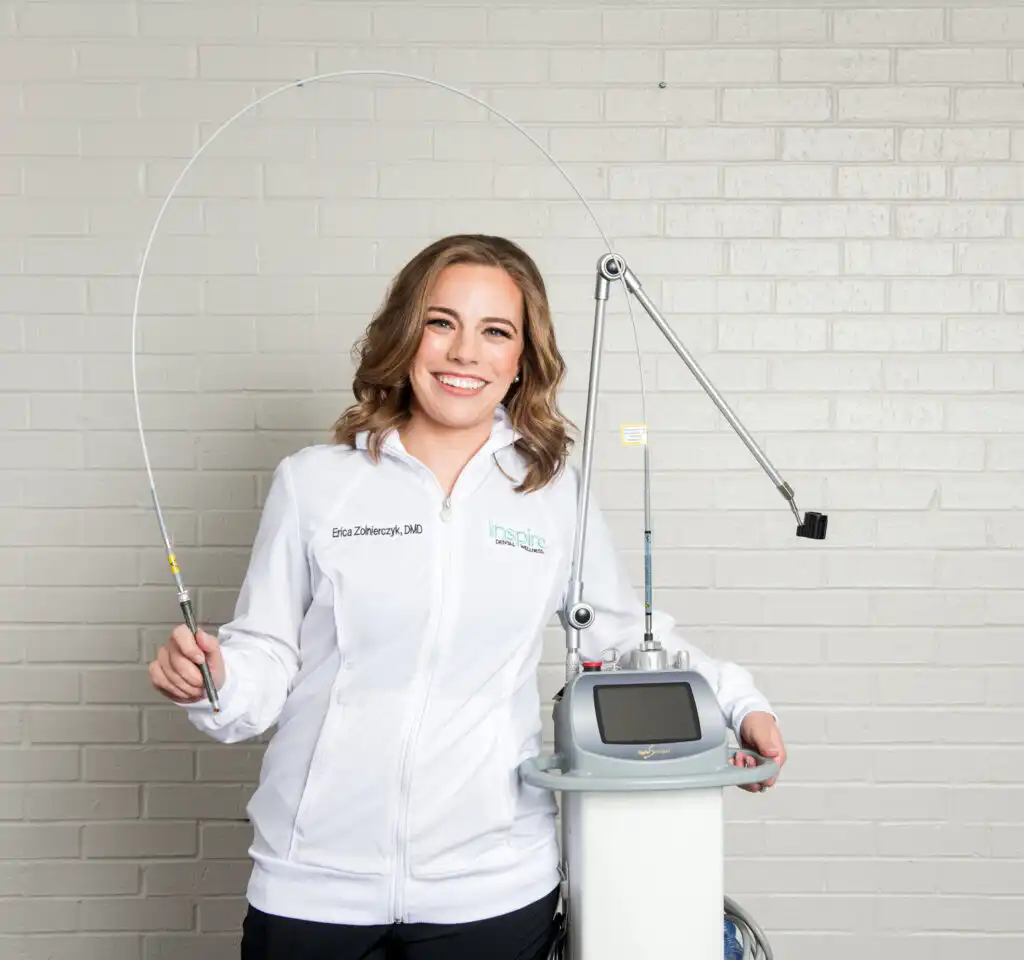
45-minute in-chair visitLocal anesthetic only — no general anesthesia for adult releases. Dr. Erica performs the functional frenuloplasty with the instrument best matched to your anatomy — fine surgical scissors or the LightScalpel CO2 laser — releasing both the frenum and the underlying fascia layer. Many adults return to normal activity within a day or two; recovery varies.
Phase 4 — Recovery & Rehab
First 72 hours through 6 weeksSoft foods, gentle stretches, and over-the-counter pain management if needed. Weeks 2 through 6 continue myofunctional exercises and stretches to prevent reattachment and build the new movement patterns into your daily function. We see you for follow-up at 2 and 6 weeks, with a final check-in at 3 months.
This isn’t the fastest path. It’s the one we’ve found gives adults the best chance of lasting change.
Precision Technique: Matched to Your Anatomy
Dr. Erica performs adult functional frenuloplasty using two precision instruments — fine surgical scissors and the LightScalpel CO2 laser — and chooses the one best suited to your tissue and the specific release goal. Matching the instrument to the case, rather than defaulting to a single tool for every anatomy, is part of our approach to supporting consistent functional outcomes.
Both approaches offer the advantages that matter for functional frenuloplasty:
- Precise depth control — important when the fascia release is intentional and specific
- Minimal bleeding and, in many cases, no sutures
- A clean wound bed that supports healing
- Tissue recovery that many practitioners describe as faster than older scalpel-based techniques
The instrument is one part of the picture. What supports a good outcome is the combination of the right tool for your case, the right protocol, and the preparation and rehab surrounding it.
What to Expect: A Common Path
Every adult case is different. The sequence below is one common path — a map, not a schedule. Some patients move through it faster; others add preparation visits based on how their tissue responds. Your actual timeline is built during your consultation, around your anatomy, your symptoms, and your goals.
- Before Your Release — The Preparation Phase Most adults attend myofunctional therapy sessions (typically weekly or biweekly) with a therapist we refer to or coordinate with. Daily home exercises reinforce the new patterns. Depending on your pattern, you may also see a bodyworker or physical therapist. We check in along the way. The release visit is scheduled only when you — and your muscles — are ready, which typically takes 4 to 12 weeks for adults.
- Day of Your Release Plan for about 90 minutes total at the office. We review your consent, take before photos, apply topical then local anesthetic (no general anesthesia), and perform the release itself in approximately 45 minutes. Most adults describe the sensation as pressure, not pain. You can drive yourself home. Many adults return to normal activity within a day or two; recovery varies.
- First 72 Hours Soft foods, cool liquids, and over-the-counter Tylenol or ibuprofen if you’re sore. Gentle stretches begin right away — they’re critical for preventing reattachment. Most adults describe the first two days as “pressure and a little sting,” not major pain. By day 3 or 4, most patients are eating normally again.
- Weeks 2 Through 6 Continued stretches, continued myofunctional therapy, and follow-up visits with us typically at 2 and 6 weeks. Most adults start noticing functional changes — easier tongue elevation, reduced neck tension, better sleep — during this window. The timing of that noticeable shift varies patient to patient.
- Three to Six Months Out Most of the long-term gains — deeper sleep, sustained reduction in jaw and neck tension, improved speech clarity — tend to show up here. We do a 3-month check-in, and most adults have transitioned off formal myofunctional therapy by that point, maintaining with their own daily routine.
The timing, visit count, and specific therapies above are illustrative. Your consultation produces your actual plan — some patients need more preparation, others less; some benefit from a single release, others from staged treatment. Dr. Erica maps your specific path at your initial visit.
Meet Your Provider: Dr. Erica Zolnierczyk, DMD

I trained in functional frenuloplasty with Dr. Soroush Zaghi at The Breathe Institute because I lived it.
My own tongue tie went undiagnosed for most of my life. I had the chronic neck tension, the jaw tightness, the sleep that never quite restored me — the kind of vague whole-body symptoms that everyone tells you are just how bodies are in your thirties.
After my own functional frenuloplasty with Dr. Zaghi, I measured an inch taller. That sounds like a joke. It isn’t — in my own case, releasing the fascia and letting my posture find neutral meant standing straighter. (Which matters a lot more when you’re short, trust me.) Not everyone experiences that particular change, but I did.
That experience is why I trained in this work. I wanted to be able to offer the same protocol — preparation, functional frenuloplasty, structured rehab — to adults in Orland Park who have been carrying the same patterns I did.
Training & Credentials
- DMD, licensed general dentist in the state of Illinois
- Trained and certified in functional frenuloplasty at The Breathe Institute (Dr. Soroush Zaghi)
- Ongoing continuing education in airway, sleep dentistry, and myofunctional medicine
- Partners with local myofunctional therapists, bodyworkers, and physical therapists for comprehensive preparation and recovery
Who This Treatment Is For — and Who It Isn’t
Adult frenectomy can produce meaningful change for the right candidate. It also isn’t the right answer for everyone, and honesty about that is part of how we practice.
Likely a Good Fit If You:
- Have documented restricted tongue function (can’t reach the palate, can’t lateralize, notched tongue tip)
- Have symptoms across multiple categories above — not just one
- Have a dentist, primary care physician, or sleep medicine doctor who concurs there’s a functional issue
- Can commit to 4–12 weeks of preparation and 6–12 weeks of rehab
- Are ready to invest in a process, not just a single visit
May Not Be the Right Fit If You:
- Are looking for a same-day release — we don’t offer that for adults
- Have no functional symptoms and are exploring this because of an online quiz
- Have active, uncontrolled periodontal disease (we treat that first)
- Have active opioid dependence requiring medical management
- Want the release without the preparation phase — we don’t perform one without the other
- Are under 18 — our kids and teens frenectomy uses a different protocol
If you’re not sure which category you’re in, that’s what your evaluation visit is for. We’d rather tell you honestly that this isn’t the right treatment than perform a release that won’t give you the result you’re looking for. And if what you want is a same-day release without myofunctional therapy, we’re not the right fit — we’d rather tell you that now than at your consultation.
Insurance and Financing
Your treatment is personal, and so is the path to pay for it. We build your care plan around your specific case, walk you through every option at your consultation, and make sure you’re comfortable with the plan before we begin.
Insurance, Handled by Our Team
Adult tongue tie release is one of the more insurance-nuanced treatments we do — it can qualify under medical or dental coverage depending on the case and how it’s documented, particularly when symptoms connect to airway or sleep concerns. Our team takes that work on for you. We review your benefits before your appointment, coordinate with your plan, and prepare the medical documentation when that’s the right path. You focus on the care; we handle the paperwork.
CareCredit Financing
If you’d like to spread payments out, we partner with CareCredit, a third-party healthcare financing company that offers monthly payment plans for qualifying patients. Applications are handled directly with CareCredit.
HSA and FSA
Adult frenectomy is typically an HSA- or FSA-eligible expense, which gives many patients a tax-advantaged path to cover treatment.
Call us at (708) 460-6699 — our front desk will verify your specific plan benefits and walk you through what your share is expected to be. View all financing options →
Results & What Adult Patients Notice
Try This Before You Read Further
Stand in front of a mirror. Open your mouth as wide as you can. Then run through these four checks:
- Tongue-to-palate. Keep your mouth wide open. Can you lift your tongue tip and touch the roof of your mouth (the hard palate behind your front teeth)? Adults without restriction can do this easily. Adults with tongue tie often can’t — or the tongue lifts only partway before something pulls it back down.
- Tongue extension. Stick your tongue straight out past your lower lip. Does it come out smoothly, or does the tip curl under, or does it look heart-shaped or notched at the tip?
- Side-to-side range. With your mouth open, try to touch each corner of your mouth with your tongue tip. Is the range symmetrical and easy, or does one side feel harder than the other?
- The “floor-of-mouth” pull. When you lift your tongue toward the palate, does the tissue under your tongue (the floor of your mouth) also lift visibly with it — almost like a web pulling up?
None of these tests are diagnostic on their own. But if more than one feels restricted, limited, or “I never thought about it but now that I try…” — that’s useful information to bring to a consultation. Dr. Erica will do a formal clinical assessment using the Kotlow classification and the functional tests used by Breathe Institute-trained providers.
The changes after functional frenuloplasty tend to unfold in stages. Here’s what adults in our practice most commonly report during recovery and beyond. Individual results vary — this isn’t a guarantee, it’s a description of the pattern we see.
First 2 Weeks
Many adults report easier tongue elevation and a noticeable release in the floor of the mouth. A common description: “my tongue finally feels like it’s the right size for my mouth.”
Weeks 2 Through 6
For many adults, jaw and neck tension begins to reduce — often noticeably for those who’ve carried that tension for years. Sleep tends to deepen. Speech articulation often tightens up (many report less slurring on “r” and “l” sounds). Many adults also notice mouth breathing at rest beginning to shift toward nasal breathing as the tongue learns to rest on the palate.
Three to Six Months
Most patients in our practice report meaningful reduction in their primary complaint — TMJ pain, neck tension, snoring, headache frequency, or sleep quality — though individual outcomes vary. Those who entered the process with a sleep study in hand often choose to repeat testing; some see measurable airway improvement, and results vary by individual. Some, like Dr. Erica, report postural changes: standing taller, less forward head posture, easier breathing during exercise.
For the broader clinical evidence base, see Dr. Zaghi’s 2019 Laryngoscope publication on lingual frenuloplasty with myofunctional therapy — one of the foundational studies on adult outcomes.
Adult Tongue Tie Release in Orland Park — Serving the Chicago Metro
Our office is located at 14512 John Humphrey Drive, Orland Park, IL 60462 — right off LaGrange Road, just minutes from Orland Square Mall. We’re easy to find and there’s plenty of free parking.
Because functional frenuloplasty isn’t widely offered and trained providers aren’t evenly distributed across the country, adults regularly travel to us from well beyond our neighborhood. We see patients from Orland Park, Tinley Park, Homer Glen, Palos Park, Palos Heights, Mokena, Frankfort, throughout the south suburbs, and from Chicago, Naperville, and the greater Chicagoland area. We’ve also treated adults whose path to us began outside Illinois — from across Indiana, Michigan, and beyond. For traveling patients, we coordinate the preparation phase with a myofunctional therapist closer to home when possible.
Office hours: Mon 8–5 · Tue–Thu 7–3
Frequently Asked Questions About Adult Frenectomy
Is a frenectomy painful for adults?
Most adults describe the release itself as pressure, not pain. The area is numbed with local anesthetic, and the fine surgical scissors or CO2 laser Dr. Erica uses are both precise and gentle, with minimal bleeding. Discomfort over the first 3 to 5 days is typically well-managed with over-the-counter Tylenol or ibuprofen.
When is it too late to fix a tongue tie?
Anatomically, it’s never too late — adults in their 60s and 70s have had successful releases at our practice and others. What changes with age isn’t the feasibility; it’s the importance of the preparation and rehab phases. Decades of compensation require more time to unwind.
Is adult frenectomy covered by insurance?
Coverage for adult tongue tie release varies by plan and by how the case is documented. Adult frenectomy can qualify under medical or dental coverage — particularly when connected to documented sleep-disordered breathing or airway concerns — and getting the most from your benefits often comes down to the documentation. Our team reviews your benefits and prepares the paperwork, so you know where you stand before your appointment.
What’s the difference between a frenectomy and a functional frenuloplasty?
A standard frenectomy removes the visible frenum. A functional frenuloplasty — the technique developed by Dr. Soroush Zaghi at The Breathe Institute — removes the frenum and releases the fascia layer beneath it, which is often what adults need to help restore tongue mobility. Dr. Erica trained directly with Dr. Zaghi in this protocol and uses it for adult releases here.
Is it worth removing a tongue tie as an adult?
For adults with documented restricted tongue function plus symptoms — TMJ pain, sleep issues, neck tension, speech difficulties — who commit to the preparation and rehab phases, yes, it typically is. For adults without symptoms who are exploring this because of an online quiz or a single suspicion, the answer is more nuanced. Our evaluation is designed to give you an honest assessment of candidacy.
Will a tongue tie release help my TMJ or neck pain?
Often, yes — when tongue tie is a primary driver. Not always. TMJ pain and chronic neck tension have multiple potential causes, and our evaluation includes airway, posture, and oral function assessment precisely to distinguish tongue-tie-related patterns from other causes. We’ll tell you honestly what we think is driving your symptoms.
How long is recovery after an adult frenectomy?
The release itself takes about 45 minutes in-chair. Acute recovery runs 3 to 5 days — most adults return to work the next day. Full functional rehab, including stretches and myofunctional therapy, runs 6 to 12 weeks. For many adults, long-term gains continue to unfold through the 3- to 6-month window.
Can a tongue tie cause sleep apnea?
Tongue tie can be a contributing factor in sleep-disordered breathing, particularly in adults with narrow upper palates. It’s rarely the sole cause. If you have sleep symptoms, we coordinate with sleep medicine physicians and typically recommend a sleep study before any surgical intervention.
Will my release be done at the first appointment?
For adults, almost never — and that’s intentional. Decades of compensation built around a tight tongue don’t unwind with the release alone. We frequently recommend 4–12 weeks of preparation (myofunctional therapy, bodywork, or PT) before the release itself. We know this can feel slow when you’re ready for relief. Many practices release same-day as a convenience, but in Dr. Erica’s experience, adult releases done without proper preparation are more likely to reattach or produce a less-than-expected result. Taking this extra step is how we aim to give you the best chance of lasting change.
Can I drive myself home after the release?
Yes. Adult frenectomy at Inspire Dental Wellness is performed with local anesthetic only — no general anesthesia or sedation for standard cases. You’re clear to drive yourself home and back to work the next day.
Do you treat adults traveling from Chicago or out of state?
Yes. Many adults travel for functional frenuloplasty because providers trained in the Zaghi protocol aren’t evenly distributed. We regularly see patients from across the Chicago area and from outside Illinois. For traveling patients, we coordinate the preparation phase with a myofunctional therapist closer to your home when possible.
Ready to Find Out if Adult Frenectomy Is Right for You?
If you’ve read this far, there’s a reason. Something in your body has been asking a question your previous providers haven’t answered. Let’s find out if tongue, lip, or buccal tie is part of the answer.
Dr. Erica Zolnierczyk, DMD · Trained and certified in functional frenuloplasty at The Breathe Institute · 14512 John Humphrey Drive, Orland Park, IL 60462
Dr. Erica Zolnierczyk is a licensed general dentist in the state of Illinois providing frenectomy, frenuloplasty and tongue tie release services. She is not an oral surgeon or periodontist.