
Myofunctional Therapy — Our Referral Approach in Orland Park, IL
We don’t perform myofunctional therapy at Inspire Dental Wellness — and that’s deliberate. Here’s how we work with the therapists who do.
Myofunctional therapy — retraining the tongue, lips, and facial muscles for proper rest posture, nasal breathing, and swallow patterns — is the kind of care that only works when it’s delivered by someone trained specifically in it. That’s typically a speech-language pathologist, a dental hygienist with OMT training, or a dedicated orofacial myofunctional therapist. Not a general dentist. At Inspire Dental Wellness, we’re the airway and frenectomy-side partner: we evaluate the dental and skeletal anatomy, perform a functional frenuloplasty when indicated, and refer to the myofunctional therapists we trust for the rehab work. This page explains that handoff — and why doing it this way is how patients actually get better.
Reviewed by Dr. Erica Zolnierczyk, DMD — Inspire Dental Wellness, Orland Park, IL

What Myofunctional Therapy Is
Myofunctional therapy (also called orofacial myofunctional therapy, or OMT) is a set of exercises and retraining protocols targeting the muscles of the tongue, lips, cheeks, and face. The goal is to establish patterns most people don’t think about until something goes wrong:
- Nasal breathing as the default, day and night
- Tongue resting on the palate rather than in the floor of the mouth
- A correct swallow pattern — without the tongue thrusting forward against the teeth
- Lip competence — lips resting together comfortably at rest, not apart
When those patterns break down — or never develop properly in the first place — the downstream effects show up in ways most people don’t connect to the tongue. Mouth breathing. Disrupted sleep. Narrow dental arches. Post-frenectomy scar tissue that re-restricts the tongue. Jaw tension. Open-mouth posture that reshapes the lower face over years.
Myofunctional therapy addresses all of that directly. It’s not cosmetic and it’s not a procedure. It’s rehab — structured exercises, coaching, habit rewiring, and ongoing follow-up, usually over 4–12 months depending on case complexity and compliance.
Who Delivers Myofunctional Therapy
- Speech-language pathologists (SLPs) with OMT training
- Dental hygienists with additional myofunctional therapy certification
- Dedicated orofacial myofunctional therapists, typically credentialed through AOMT or the International Association of Orofacial Myology (IAOM)
None of those credentials belong to a general dentist. That’s the honest reason IDW refers rather than performs.
When Myofunctional Therapy Is Typically Part of the Plan
Myo isn’t right for every patient. It is load-bearing for a specific set of cases, and those cases often start — or end up — in our chair.
1. Before and After a Frenectomy (Especially for Adults)
A functional frenuloplasty releases the anatomical restriction. Myofunctional therapy is what teaches the tongue to work correctly once the restriction is gone — and, for adults especially, prepares the tongue for the release in the first place. Skipping the prep-and-rehab phases is one of the most common reasons adult frenectomies don’t deliver their intended benefit. For this reason Dr. Erica’s protocol for adults > 1 year old is preparation-first. Adult frenectomy · Our frenectomy approach
2. Airway-Focused Orthodontic Cases
When a narrow palate, crowded arch, or jaw-position issue is part of an airway picture, orthodontic treatment often benefits from a myo partner running in parallel — especially for adults where arch expansion alone won’t retrain swallow and tongue-posture habits developed over decades. Functional orthodontics
3. Adult Sleep-Disordered Breathing Where Tongue Posture Is a Contributor
Tongue that rests low and back, away from the palate, is a pattern that shows up in many adult OSA cases. A sleep physician manages the sleep apnea. An airway dentist evaluates the contributing anatomy. A myofunctional therapist retrains the rest posture. Sleep apnea screening at IDW
4. Kids With Persistent Mouth-Breathing After the Underlying Cause Is Addressed
When the anatomical cause — enlarged tonsils, lip tie, narrow palate — has been addressed medically, dentally, or surgically, the habit of mouth-breathing often persists. Myofunctional therapy is the habit-rewiring layer.
5. TMJ and Orofacial Pain Recovery
Tongue posture and swallow patterns contribute to TMJ joint and muscle load. When TMJ recovery plans plateau on dental and physical-therapy work alone, a myo partner often closes the gap. TMJ care at IDW
Our Role at IDW — and Where Your Myo Therapist Begins
Scope accuracy is how patients actually get better. Every patient we refer to myofunctional therapy has the same core need: someone on the dental side who understands the airway, frenum, and orthodontic picture, and someone on the therapy side who has the clinical training and weekly coaching time to do the rehab work. That’s two people, not one.
What we do at IDW
- Evaluate tongue function, lingual frenum, lip tie, and palate anatomy
- Perform functional frenuloplasty (frenectomy) when a lingual or maxillary restriction is the anatomical block
- Screen for airway signs — tongue posture at rest, Mallampati, palate shape — and coordinate with sleep physicians when indicated
- Refer to a myofunctional therapist we trust, for the therapy itself
- Coordinate the shared plan — sequence, timing, and which clinician owns which phase
- Check in on progress through follow-ups on dental-side variables (healing, frenum scar tissue, arch development, orthodontic fit)
What the myofunctional therapist does
- Full orofacial myofunctional assessment — tongue mobility, swallow pattern, resting posture, lip seal, breathing habits, speech patterns
- Individualized home-exercise program tailored to the findings
- Weekly or bi-weekly coaching visits to refine technique and progress the program
- Pre-frenectomy conditioning and post-frenectomy rehab — the stretches, exercises, and scar-tissue management that prevent reattachment
- Sleep and breathing habit work — nasal breathing practice, mouth-taping guidance where appropriate, sleep-posture coaching
- Ongoing progress tracking and case-specific communication back to us
The short version
We evaluate the anatomy and release it when indicated. They retrain the function. Most cases need both.
How IDW and Your Myofunctional Therapist Work Together
A coordinated plan follows a recognizable sequence. Not every case does every step, but most do most of them.
- Initial Evaluation at IDW You come in for an airway + frenum + bite evaluation. We assess tongue mobility, lingual frenum, palate shape, breathing patterns, and dental/skeletal context. If we think myofunctional therapy is part of your path, we say so — and we say so early, before any release is scheduled.
- Referral to a Myofunctional Therapist We Trust We refer to an OMT in the Chicago / south-suburbs area. The therapist does their own full assessment, builds an individualized exercise program, and sets a realistic timeline with you.
- Coordinated Pre-Release Work (If Frenectomy Is Planned) For adult patients and most kids over age one, myofunctional therapy runs for several weeks before a frenectomy. This conditions the tongue and surrounding musculature so the release actually translates into function. More on our preparation-first approach
- Release (When Indicated) and Post-Op Rehab We perform the functional frenuloplasty — LightScalpel CO2 laser for kids, and laser or fine surgical scissors for adults depending on the case. The therapist resumes the program post-operatively with specific stretches and exercises to manage healing and prevent scar-tissue reattachment. Progress check-ins happen on both sides.
Not sure which end of this you need? Start with a dental evaluation at IDW. We’ll tell you whether myofunctional therapy is likely part of your plan, which local therapist is the right fit, and what the sequence should look like. If myo turns out to be the entire answer — i.e., you don’t need dental or frenum work at all — we’ll tell you that too and refer you direct.
Who We Refer To
Inspire Dental Wellness maintains a referral network of trained myofunctional therapists across the Chicago and south-suburban area. We match each patient to the therapist whose training, location, insurance acceptance, and scheduling availability best fit the case.
When you come in for an evaluation, we review the referral options with you directly — practice location, training credential, typical program length, and any specific clinical strengths relevant to your case (e.g., post-frenectomy rehab, pediatric work, airway-centered programming).
How Dr. Erica’s Training Shapes the Way We Refer
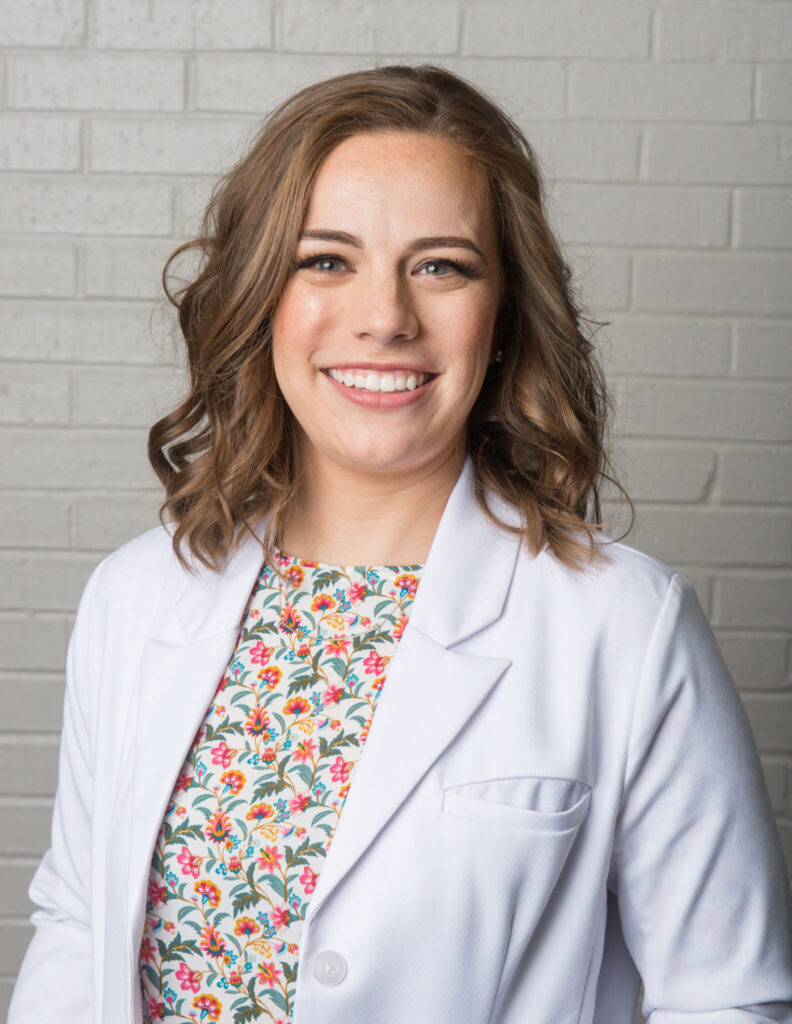
“Early in my frenectomy work I saw cases where the release went well, the healing went well, and the outcome was still disappointing — because nothing was rewiring the function the tongue had been restricted from doing for thirty years. The gap between anatomy and function is what myofunctional therapy fills. And the people who do it well have spent years — full careers, often — on it.
“I trained in functional frenuloplasty at The Breathe Institute with Dr. Soroush Zaghi. The Breathe Institute protocol is built around the coordinated dental-therapist partnership — frenum release paired with structured pre- and post-op myofunctional therapy. That training is the reason I refer for myo rather than try to do it myself. The best outcomes come from respecting the specialization.
“Separately, my airway-focused orthodontics training under Dr. Ed Lipskis at The Centre for Integrative Orthodontics — an annual Airway Focused Orthodontics course Dr. Lipskis has been running since 2018, taken over the course of a year — informs how I think about the skeletal and airway pieces that sit upstream of myo. Narrow palates, jaw position, airway anatomy — and when orthodontic and airway work should run alongside the therapy.
“What I bring to the table as your dentist is the evaluation, the release when it’s indicated, and the coordination across the people doing the other specialized pieces. What a good myofunctional therapist brings is the weekly, specialized, long-arc work of rebuilding how the tongue functions. Both are necessary. Neither is optional.
“The whole premise is why the practice is called Inspire Dental Wellness. Inspire comes from the Latin inspirare — to breathe. Tongue function, airway, and breathing are the through-line of how I built the office. Referring for myofunctional therapy — rather than pretending to do it in-house — is how that premise stays honest.”
— Dr. Erica Zolnierczyk, DMD
Who This Is For — and Who It Isn’t For
This is a good fit if you
- Are evaluating an adult tongue tie release and want the myo component properly sequenced
- Are a parent of kids whose mouth-breathing, tongue-thrust, or speech patterns suggest myo is needed
- Have sleep-disordered breathing and have been told tongue posture is a contributor
- Are an orthodontic patient whose treatment plan benefits from parallel myo work
- Are post-frenectomy and need rehab partners with a coordinator
- Want one dental office that knows how to refer for myo well, rather than piecing the network together yourself
This isn’t the right fit if you
- Are looking to have myofunctional therapy performed at the dentist’s office — we refer out
- Want a self-guided program only — please see an OMT directly for that decision
- Are insurance-first shopping — IDW is out-of-network, and myo is billed separately by the therapist
- Have an acute dental emergency — myo is a long-arc rehabilitative process, not acute care
Benefits and Financing
Inspire Dental Wellness is independently owned and operated — Dr. Erica’s practice, where treatment plans are built around what your case actually needs, not around what a dental plan will or won’t approve. We run a concierge, fee-for-service model. Our team will review your benefits with you ahead of the visit, prepare the documentation your plan requires, and handle the paperwork on our side. For patients who want financing flexibility on the dental portion of care, we partner with CareCredit — a third-party healthcare financing company. Specifics are reviewed at consultation.
The myofunctional therapist you are referred to bills separately from IDW and handles their own insurance and financing policies. Each therapist’s structure is different — some bill medical insurance, others operate on direct-pay or package pricing — and we don’t know the specific terms each provider uses. Ask the therapist directly when you book your first visit; they’ll walk you through their costs and billing.
It applies to cleanings, exams, and routine preventive care — not to airway evaluations, frenectomy, or myofunctional-therapy referrals. Learn more →
Myofunctional Therapy Referrals in Orland Park — and the Surrounding Suburbs
Inspire Dental Wellness is at 14512 John Humphrey Drive, Orland Park, IL 60462 — accessible from Tinley Park, Palos Heights, Palos Park, Homer Glen, Oak Forest, Orland Hills, Frankfort, Mokena, and the surrounding south-suburban Chicago communities. Our myofunctional-therapy referral network covers the same geographic area with in-person providers. See all areas we serve →
Office hours: Mon 8–5 · Tue–Thu 7–3
Frequently Asked Questions About Myofunctional Therapy
What is myofunctional therapy?
Myofunctional therapy (orofacial myofunctional therapy, or OMT) is a structured rehabilitation program targeting the muscles of the tongue, lips, cheeks, and face. The goal is to restore proper tongue rest posture, nasal breathing, swallow patterns, and lip competence. It is delivered by a trained therapist — typically a speech-language pathologist, dental hygienist with OMT training, or dedicated orofacial myofunctional therapist — over a program that often runs several months.
Do you offer myofunctional therapy at Inspire Dental Wellness?
No. IDW does not perform myofunctional therapy. Myo is a specialized clinical discipline taught outside general dentistry; it belongs with a trained myofunctional therapist. What we provide is the dental-side evaluation, frenectomy when a tongue restriction is the anatomical block, airway screening, and coordinated referral to a therapist we trust. Scope accuracy matters — the outcomes are better when the dentist and the therapist each stay in their lane and work together.
Can I do myofunctional therapy myself using online programs or videos?
A self-guided program has real limits. A trained therapist runs an orofacial assessment to identify exactly what’s dysfunctional in your case, builds the exercise program to match, and adjusts weekly based on your progress. Free videos can be useful as supplemental practice, but they can’t assess your specific pattern or correct poor technique in real time. For adult cases — and especially for post-frenectomy rehab — a trained therapist makes a measurable difference.
Does myofunctional therapy help sleep apnea?
The evidence supports myofunctional therapy as an adjunctive part of sleep-disordered breathing care — meaning it can contribute to better outcomes alongside physician-directed treatment, not as a standalone cure. Peer-reviewed research has shown myo can reduce apnea-hypopnea index and improve daytime symptoms in some patients. A sleep medicine physician should still diagnose and manage sleep apnea; myo fits in as one piece of a broader plan.
Will insurance pay for myofunctional therapy?
That depends entirely on the therapist’s billing structure — not on IDW. Some myofunctional therapists bill medical insurance under specific codes; others operate on a direct-pay or package-pricing model. We don’t know each provider’s specific terms — ask the therapist directly when you book your first visit. The dental-side work we provide is handled separately through IDW’s out-of-network concierge process.
Who do you refer to in the Chicago / south-suburbs area?
We maintain a working referral network of trained myofunctional therapists — SLPs with OMT credentials, dental hygienists with additional myo training, and dedicated OMTs — across the Chicago and south-suburban area. We match each patient to the therapist whose training, location, and scheduling best fits the case. Referral options are reviewed at your evaluation.
I already have a myofunctional therapist. Can I still come to IDW for the dental side?
Yes. If you have an existing myofunctional therapist and are looking for an airway-trained dentist to pair with them for evaluation, frenectomy, or orthodontic coordination, we work directly with your therapist. Bring their contact info to your evaluation and we’ll coordinate from day one.
Ready to Put the Whole Plan Together?
Start with a dental evaluation. We’ll tell you whether myofunctional therapy is part of your path, which local therapist is the right fit, and how the sequence should run.
Mon 8–5 · Tue–Thu 7–3 · 14512 John Humphrey Drive, Orland Park, IL 60462